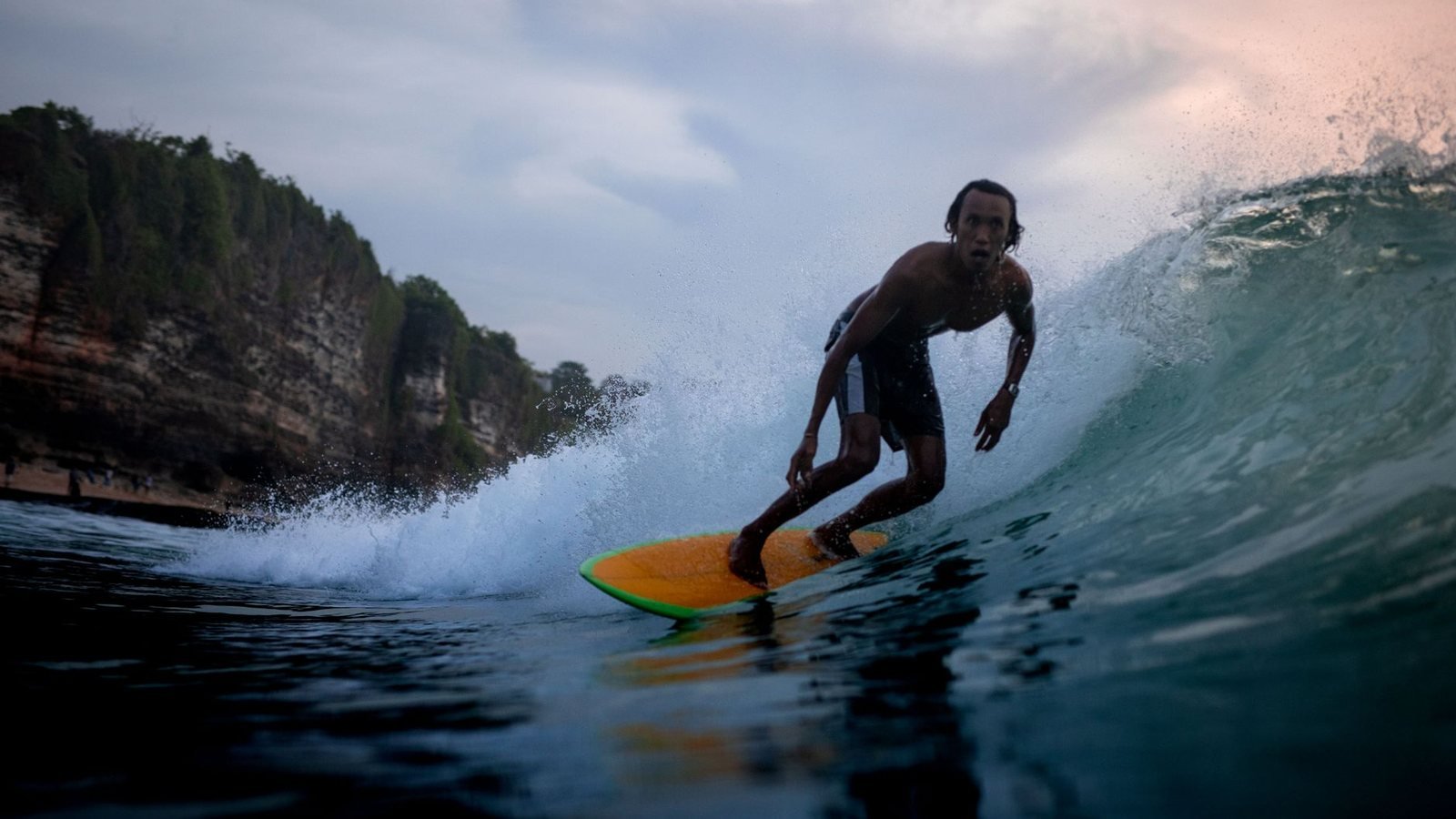
Bali is one of the world's best surf destinations, with waves for every level. Here are the best spots, the season and tips for learning or scoring.
Ready to plan?
Add it in the trip planner →The west coast (Kuta, Canggu, Uluwatu) is best from May to September (dry season, offshore wind). The east coast (Keramas, Sanur, Nusa Dua) works better in the wet season. Book a surf school or guide if you don't know the reefs, and respect the line-up. Bring reef shoes for the rocky bottoms.
Bali works year-round if you follow the wind. The west coast (Kuta, Canggu, Uluwatu, Padang Padang) is best in the dry season, May to September, when offshore winds groom the reefs. In the wet season the wind flips and the east coast — Keramas, Sanur, Nusa Dua — comes alive. There's swell all year; it's mostly a matter of being on the right side of the island. A dawn patrol usually offers the cleanest, least crowded waves.
Beginners are spoiled for choice: surf schools line Kuta, Batu Bolong (Canggu) and Seminyak, with lessons, boards and soft-tops included. As you progress to the reef breaks, respect the pecking order in the line-up, wear reef booties, watch the tide (many reefs are unsurfable at dead low), and never take on a spot beyond your level — Uluwatu, Padang Padang and Keramas are powerful, shallow waves for experienced surfers only. Bring reef-safe sunscreen and plenty of water, and check you're covered for surfing on your travel insurance.
Most travellers surf the south, but Bali has more. On the west coast, mellow Medewi and Balian offer long, forgiving left-handers and a quiet village vibe — great once you're past the beginner stage. Off Sanur, the Nusa islands (Lembongan and Ceningan) hide reef breaks like Shipwrecks and Playgrounds. And if you're chasing world-class waves, nearby Lombok — Kuta Lombok, Gerupuk and the legendary Desert Point — is a short hop away. Rent boards easily in any surf town, or bring your own; board bags travel fine on the inter-island fast boats.